
In cosmetology, technical skill may open the door, but confidence, communication, creativity and the ability to connect with people determine what happens after that door opens. At Wallace Community College, the cosmetology program is built around that understanding. Its purpose is not simply to teach students how to cut hair, apply color or perform a facial. It is to prepare them for the reality of a profession where every technical service takes place within a relationship between stylist and client.
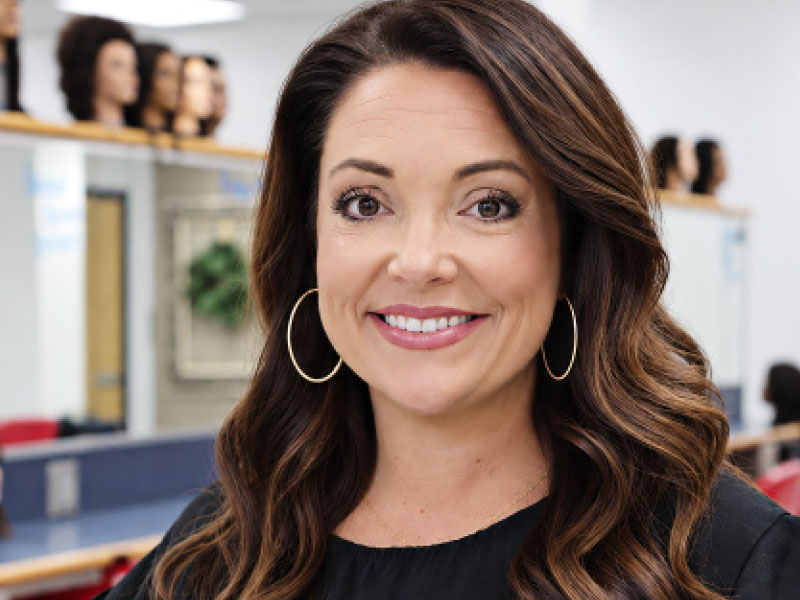
For Amanda Campbell, Cosmetology Director, who has taught cosmetology for nearly two decades and is now in her eighth year at Wallace, that philosophy begins with one word, community. “Community is the heartbeat of what we do,” she says, describing a program shaped by hands-on education, industry-recognized credentials and a network of professionals who continue to invest in students long after they graduate.
Wallace Community College’s cosmetology program can be completed in three semesters, combining classroom instruction with laboratory practice and progressively moving students toward live client work. The curriculum encompasses hair design, cutting, styling, shampooing, chemical texture services, skin and nail care, sanitation and other core areas of cosmetology. The college’s current program information similarly emphasizes the progression from classroom learning and practice on mannequins and peers to live work activities. Yet Amanda believes the distinction lies in how those elements come together. Students are not expected to remain behind a textbook. They are encouraged to take what they learn and apply it early, allowing technical knowledge to become meaningful through experience.
That practical emphasis has become particularly important as the expectations of the beauty industry have changed. Amanda identifies communication and professional soft skills as some of the biggest challenges facing today's students. Increased reliance on technology and the social changes that followed COVID-19 have meant that many young people have fewer opportunities for direct interpersonal interaction. In a profession where greeting a client, understanding their expectations, handling frustration and maintaining professionalism are essential, those skills cannot be treated as secondary.
Wallace addresses the challenge through direct industry involvement. Twice a year, its advisory council brings together salon owners, med-spa professionals, veteran stylists and Wallace graduates now working in the field. Their feedback helps faculty understand what employers are seeing in new professionals and where students need additional preparation. Recent graduates offer one perspective; experienced professionals bring another. Together, they help keep the program connected to the realities of the workplace.
Live client work is another critical part of that preparation. Students begin working with clients during the second semester rather than waiting until their final term. Amanda believes there is a fundamental difference between being told how to handle a client and actually having someone sit in the chair. The earlier experience gives students more time to develop confidence while they still have instructors nearby to guide them. The program also places considerable emphasis on industry credentials. Students can earn certifications including Barbicide, Matrix SoColor, lash-extension and blowout credentials, giving them additional qualifications that can strengthen their position when they enter the workforce. Wallace also operates an aesthetics program, creating another closely connected pathway within the beauty and wellness space.
Industry exposure extends beyond the college laboratory. Students participate in salon observations during their second and third semesters, visiting local salons to see professional operations, meet industry personnel and build relationships. These visits give students another opportunity to understand the environment they will eventually enter while strengthening the college's partnerships with local businesses. Inside the classroom and laboratory, creativity is treated as seriously as technical precision. Students are taught the textbook and state-board methods required for licensure, but Amanda does not want those requirements to suppress individual expression. “We do not stifle their creativity but rather give every support to help them become a professional,” she explains.
Students document their work through before-and-after photographs and are encouraged to explore areas that interest them. Their final project has evolved into a digital portfolio rather than a rigid, prescribed presentation. Amanda recalls moving away from the traditional PowerPoint model after recognizing that it did not reflect how modern stylists market themselves. Students can now choose the format that best presents their work, including social-media-driven approaches such as TikTok. The change reflects a larger principle within the program: educators must be willing to examine their own methods. As technology, trends and student expectations change, Wallace continually asks whether its teaching practices are still relevant. The objective is not simply to follow trends, but to ensure students are being prepared for the professional world they will actually encounter. That preparation is reflected in the program's reported 100 percent pass rate on the Alabama Board of Cosmetology practical examination, according to Amanda. The college's current program information confirms that successful completion of the curriculum prepares students to apply for the Alabama State Board examination and pursue licensure.
But perhaps the strongest evidence of the program's impact comes from its graduates. Amanda recalls Colby Mac Chancey, who entered Wallace directly from high school with no previous cosmetology background. During her training, she was consistently among the first to arrive and last to leave, treating live-client work as though she were already operating her own salon chair. She secured employment before graduation, built a clientele and, within three years of receiving her license, became a salon owner, opening The Modern Mane. Even more significant, her salon was built with two other Wallace graduates, Lana Harrison and Dianna Lewis, and everyone working there had come from the College’s program. Amanda says Colby described their shared beginning simply: “All of their roots began at Wallace Community College.” Their education gave them a common foundation while allowing them to discover their individual identities and creative styles.
That sense of continuity is central to Wallace's community model. Former students return as industry professionals, participate in advisory activities and contribute to initiatives such as “Processing More Than Hair,” a networking and educational community created by members of the advisory council for stylists, barbers, nail technicians and others in the industry. Wallace students can participate as well, creating a direct bridge between education and the professional community.
The college is now preparing for another step forward. A capital improvement plan will bring cosmetology and aesthetics together in an updated facility designed to resemble contemporary salon environments more closely. Wallace is also exploring specialized certifications, stronger industry partnerships, a potential associate-degree pathway and additional career routes such as barbering and nail technology. For Amanda, however, expansion is not about growth for its own sake. It is about remaining responsive to students and an industry that refuses to stand still.
.jpg)
Amanda Campbell, Cosmetology Director
wallace.edu
“We do not stifle their creativity but rather give every support to help them become a professional”
Ed Outlook Magazine is where education comes alive through real stories, real people, and real impact.
We respect your privacy. The email address you provide will be used solely for subscription purposes and will not be stored or shared.
Subscribe Now