
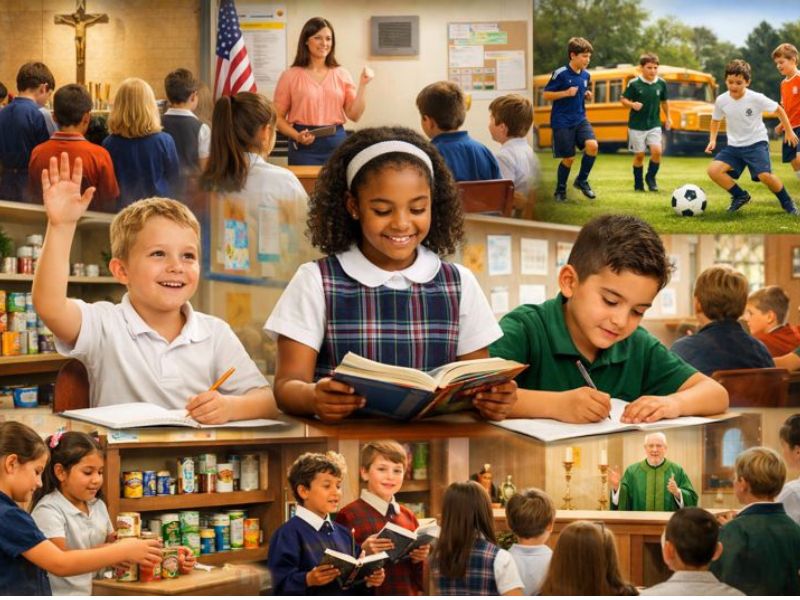
From morning prayer to classes, lunch, and service, here’s what a typical school day looks like in simple and real terms
Many parents and students wonder what life is like inside a Catholic school in the United States. Some people imagine it is only about religion, while others think it is very strict. The truth is much more balanced. A typical day in a Catholic school usually includes academics, faith, discipline, friendship, and a strong sense of community. The goal is not only to help students get good grades, but also to help them grow into kind, confident, and responsible people.
Morning arrival: calm start and friendly faces
Most students arrive in the morning between 7:30 AM and 8:15 AM. Some students come by school bus, while others are dropped off by parents. Many Catholic schools have staff members and teachers waiting outside to greet students. This small routine makes the morning feel welcoming and safe.
After arriving, students head to their classrooms, put away their backpacks, and get ready for the day. In many schools, students wear uniforms, which can make mornings easier and help everyone feel equal and focused.
Morning prayer and announcements
One of the biggest differences in Catholic education is the way the day begins. Before lessons start, there is usually a short morning prayer. This may happen in the classroom, over the school intercom, or during a quick gathering. The prayer is simple and often asks for guidance, peace, or blessings for the day.
After prayer, the school shares morning announcements. Students might hear reminders about upcoming events, sports practice, school clubs, or special Mass days. This creates a sense of structure and helps students feel connected to what is happening in the school community.
First classes: focused learning begins
After announcements, students begin their academic classes. Catholic schools in the USA follow strong academic standards, and many families choose them for quality education. Subjects usually include: English and reading, math, science, social studies, and religion class.
Even though religion is a regular subject, it does not replace academics. Instead, it adds value-based learning that supports personal growth. Religion class may include lessons about faith, ethics, kindness, and understanding others.
Teachers often keep classrooms organized and calm. Students are encouraged to listen, participate, and respect each other. In many Catholic schools, discipline is firm but caring. The goal is to help students improve, not embarrass them.
Mid-morning break: a quick reset
Many Catholic schools give students a short break in the morning. Younger students may have recess, where they run, play, and talk with friends. Older students may have a short break between periods or time to grab a snack.
This time is important because it helps students return to learning with fresh energy. Social skills also grow during breaks, because students learn to share, communicate, and resolve small problems politely.
Special classes: art, music, and more
A typical day in a Catholic school is not just reading and writing. Most schools also include special classes like art, music, physical education, computer, or technology, library time, and foreign language (in many schools).
These classes help students explore creativity and build real-life skills. It also makes the school day more enjoyable. Students often look forward to these periods because they feel different from regular classroom work.
School Mass or chapel time (on certain days)
Not every Catholic school has Mass daily, but many schools celebrate Mass weekly or monthly. Some schools also offer prayer services or quiet chapel visits. Students may walk to the church on campus or gather in a school hall.
Mass days often feel special. Students may dress more neatly, participate in readings, and sing together. Even for students who are still learning about the faith, the experience often feels peaceful and meaningful.
Lunch time: food, friends, and fun
Lunch is one of the most talked-about parts of any school day. In Catholic schools, lunch can take place in a cafeteria, classroom, or lunch hall. Some students bring food from home, while others buy lunch at school.
Lunch time is about more than eating. It is when students relax, laugh, share stories, and build friendships. Many Catholic schools also encourage good table manners and respectful behavior during lunch. After lunch, younger students often get outdoor recess time. Older students may have a short break before returning to classes.
Afternoon classes: learning continues
After lunch, students return to their afternoon schedule. This may include more academic subjects, group projects, or class discussions. Teachers may also include activities that help students think deeply and speak confidently.
Catholic schools often focus on building good habits, like completing homework, staying organized, and being punctual. These habits help students not only in school, but also later in college and careers.
Service, leadership, and community values
One unique part of student life in Catholic schools is the strong focus on service and community responsibility. Many schools include: community service projects, charity drives, helping younger students, classroom responsibilities, and leadership roles in the student council. Students are taught that success is not only about personal achievement. It is also about helping others and being a good example. This is one reason many families believe Catholic school student life supports strong character development.
End of the day: dismissal and after-school activities
Most Catholic schools end between 2:30 PM and 3:30 PM. After final announcements, students pack up and head home. Some students attend after-school care programs, while others stay for activities like sports teams, choir or music clubs, academic clubs, volunteer groups, tutoring, or study time. These programs help students stay active, improve skills, and make even stronger friendships.
Why this daily routine matters
A typical day in a Catholic school in the USA is designed to support the whole student. It seamlessly blends learning, discipline, faith, and community. Many students feel supported because teachers know them personally, classrooms feel structured, and the school environment encourages respect and kindness. For many families, Catholic education is not just about religion. It is about giving children a strong foundation for life, both inside and outside the classroom.



.jpg "University of Houston Invests in the Future of Engineering and Nursing")