
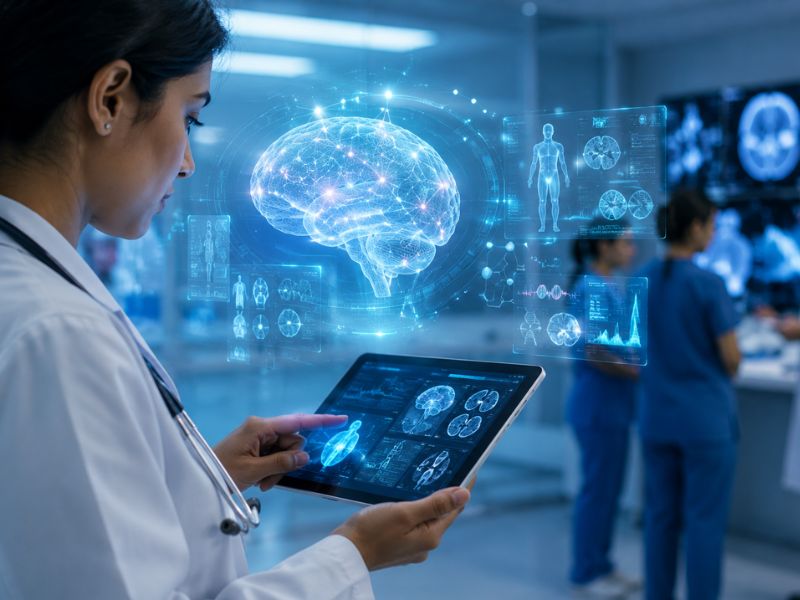
A multibillion-dollar push into artificial intelligence research is highlighting the growing need for skilled healthcare professionals who can responsibly apply AI to improve patient care and medical discovery.
Washington, D.C., 30 July 2026 – Artificial intelligence is becoming one of the most influential technologies in modern healthcare. A recent announcement of a $5 billion U.S. investment in AI-driven scientific research reflects the increasing focus on using advanced technologies to solve complex healthcare challenges. The initiative aims to accelerate research, improve medical discoveries, and strengthen innovation across multiple scientific fields.
Healthcare is expected to be one of the biggest beneficiaries of this investment. Researchers are exploring how AI can help identify the causes of chronic diseases, speed up drug discovery, support personalized treatments, and improve clinical decision-making. By analyzing large volumes of medical data in a short time, AI has the potential to help researchers and healthcare providers make faster and more informed decisions.
As AI technologies continue to advance, healthcare organizations are placing greater importance on workforce readiness. Successfully integrating AI into clinical practice requires professionals who understand both healthcare processes and emerging technologies. Building AI knowledge among physicians, nurses, researchers, and healthcare administrators is becoming increasingly important to ensure that these tools are used effectively and responsibly.
Training also plays a vital role in helping healthcare professionals understand the ethical and practical aspects of artificial intelligence. Issues such as data privacy, transparency, regulatory compliance, and responsible decision-making remain essential as AI becomes more integrated into patient care. Continuous education can help organizations adopt new technologies while maintaining trust and high standards of care.
Beyond hospitals and research laboratories, AI is transforming many areas of healthcare, including medical imaging, disease prediction, remote patient monitoring, hospital operations, and clinical documentation. These applications can improve efficiency, reduce administrative workloads, and allow healthcare professionals to spend more time focusing on patient care.
Industry experts believe that investments in AI infrastructure alone will not be enough to drive meaningful change. Long-term success will depend on combining advanced technology with skilled professionals who understand how to apply AI safely and effectively in real-world healthcare settings. Organizations that invest in both innovation and workforce development are likely to be better prepared for the future of digital healthcare.
As artificial intelligence continues to reshape the healthcare landscape, education and continuous learning will remain central to its successful adoption. The latest investment highlights a broader shift toward combining technological innovation with human expertise to improve patient outcomes, accelerate scientific progress, and build a more efficient healthcare system for the future.



Latest News
.jpg "University of Houston Invests in the Future of Engineering and Nursing")



Ed Outlook Magazine is where education comes alive through real stories, real people, and real impact.
We respect your privacy. The email address you provide will be used solely for subscription purposes and will not be stored or shared.
Subscribe Now