
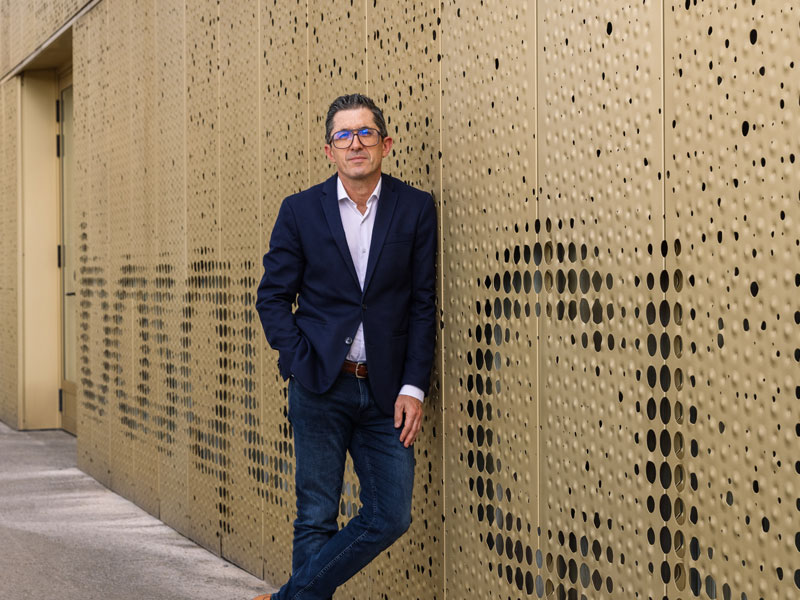
Basque Culinary Center: fifteen years of connecting education, innovation, entrepreneurship and society through gastronomy.
Fifteen years ago, Basque Culinary Center began with an ambitious idea: that gastronomy deserved its own space for higher education. What started with the launch of a degree programme and a building in San Sebastián has evolved into something much larger: an international ecosystem dedicated to advancing gastronomy and its contribution to society.
Today, as we celebrate this milestone, it is worth reflecting not only on what has been achieved, but also on the responsibilities and opportunities that lie ahead. Inspired by the vision of Basque Culinary Center as a transformative ecosystem connecting education, innovation, entrepreneurship and social impact.
When we opened our doors, gastronomy was already an important cultural and economic force. From the outset, our conviction was different. Gastronomy is a value chain that connects producers, businesses, science, technology, health, sustainability and culture. Educating future professionals required a broader perspective, one capable of understanding food and beverages not only as products, but as vehicles for economic development, cultural identity and social transformation.
Looking back, perhaps the most significant achievement is the creation of a community. Over the past fifteen years, thousands of students from more than 40 countries have passed through our classrooms. Researchers, entrepreneurs, industry professionals and innovators have become part of a shared project. Together, they have demonstrated that gastronomy can generate knowledge, create economic value and contribute meaningfully to societal challenges. The international reach that Basque Culinary Center has achieved today was difficult to imagine when the journey began, yet it has been made possible through openness, collaboration and a constant willingness to learn from the world.
This evolution has been guided by a legacy we were fortunate to inherit. The pioneering spirit of the New Basque Cuisine movement (that is 50 years now) taught us the value of curiosity, innovation, collaboration and respect for roots. Those principles remain as relevant today as they were decades ago.
Innovation only creates lasting impact when it remains connected to identity and purpose. The challenge has never been choosing between tradition and modernity. It has been finding ways for both to coexist and strengthen one another. At the same time, culinary education itself has undergone profound transformation. The kitchen remains at the heart of our work, but the profile of the professional is changing. Today's students must combine technical excellence with leadership capabilities, entrepreneurial thinking, sustainability awareness and digital literacy. They need to understand how consumer expectations evolve, how technology reshapes value chains and how food systems interact with broader social and environmental realities. The future belongs not to specialists who know only one discipline, but to professionals capable of navigating complexity and connecting knowledge across domains, that is why our educational model is built around the philosophy of 360º Gastronomy.
This brings us to one of the defining challenges of the next decade: talent. Around the world, the hospitality and food sectors face significant talent shortages. Attracting people is important; helping them thrive is essential. Future culinary education must focus not only on skills development but also on creating conditions for meaningful professional growth. New generations are looking for purpose, impact and opportunities for continuous learning. They want to contribute to projects that align with their values and offer possibilities for personal development. Educational institutions have a responsibility to prepare them technically while also helping them build resilience, adaptability and leadership.
Sustainability represents another defining challenge. The food sector sits at the centre of critical global conversations about climate change, biodiversity, health and resource management. Future culinary leaders will need tools that extend far beyond menu design or operational excellence. They will require a systems perspective capable of understanding the environmental, social and economic dimensions of their decisions. Sustainability cannot remain a standalone topic. It must become an integral part of how we educate, research and innovate.
Technology and artificial intelligence are also reshaping the landscape. Their potential is enormous, from improving productivity and personalisation to accelerating research and knowledge creation. Yet technological progress raises equally important questions about ethics, creativity and human connection. The future will not be defined by technology alone, but by how we choose to integrate it into our work and our lives. Gastronomy, perhaps more than many other fields, reminds us that human experience remains irreplaceable. Hospitality, emotion, storytelling and care continue to matter. As technology advances, the human dimension of gastronomy becomes even more valuable.
Fortunately, these challenges also create extraordinary opportunities. We are witnessing growing recognition of gastronomy's role in improving health, strengthening local economies, promoting sustainability and fostering cultural dialogue. New areas such as food innovation, entrepreneurial ecosystems, sustainable beverages and interdisciplinary research are opening pathways that barely existed fifteen years ago. Projects such as the Gastronomy Open Ecosystem and EDA Drinks & Wine Campus reflect a broader ambition: creating platforms where knowledge, talent and innovation converge to generate impact beyond the boundaries of traditional education.
As we celebrate fifteen years, there is certainly pride in what has been accomplished. But anniversaries are not only opportunities for reflection. They are invitations to look ahead. If our first fifteen years were dedicated to building an institution, our next chapter must focus on strengthening an ecosystem. An ecosystem that connects education with entrepreneurship, research with industry and local roots with global ambition.


.jpg "University of Houston Invests in the Future of Engineering and Nursing")