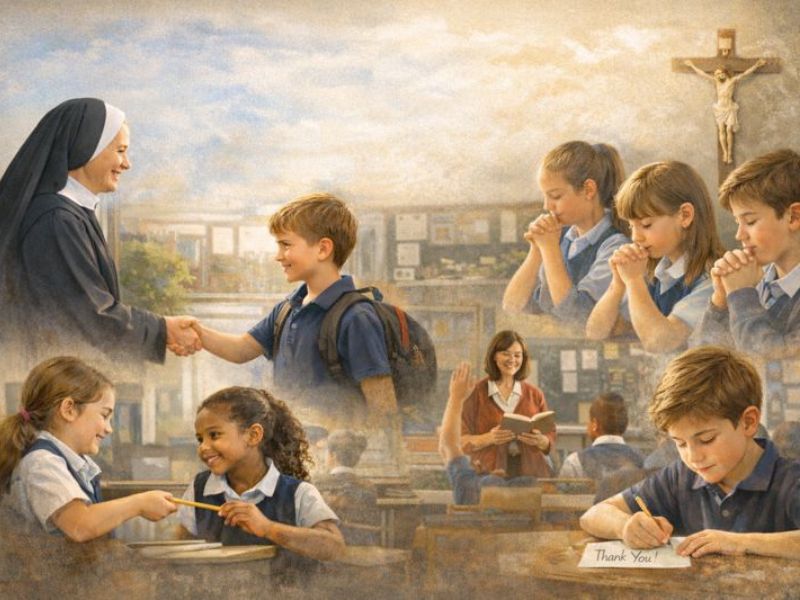
From morning prayer to daily kindness, Catholic school routines quietly shape stronger students, better classrooms, and brighter futures.
In a world where education often feels rushed and stressful, many families in the United States are looking for something more stable. They want a school that does not just teach math, science, and reading, but also teaches children how to be responsible, respectful, and confident. This is one reason why Catholic schools continue to stand out.
Catholic schools are known for strong values, supportive teachers, and a close community feel. But one of their most powerful strengths is something many people do not notice right away. It is the power of small moments. Tiny habits, done every day, create big results over time.
These habits may look simple. A greeting at the door. A quiet prayer before class. A reminder to help a classmate. A routine of saying thank you. But when these moments become part of a child’s daily life, they shape the way students learn, behave, and grow.
Why small habits matter more than big speeches
Many schools try to inspire students through big events, special assemblies, or motivational talks. Those things can be helpful. But real growth often happens in smaller ways.
Small habits are powerful because they are repeated. When students practice something daily, it becomes natural. It becomes part of who they are.
Catholic schools often focus on consistency. Students do not just hear about respect once. They practice it every day. They do not just learn about responsibility in one lesson. They build it slowly through daily routines.
This is how Catholic education supports the whole child. It is not only about grades. It is about building character, habits, and self-control.
The morning routine sets the tone.
One of the first small moments in many Catholic schools is the start of the day. The morning routine is not rushed or chaotic. It is structured.
Many Catholic schools begin with prayer, a reflection, or a quiet moment. This not only supports faith. It also supports focus. Students start the day calmly. They feel grounded. They mentally prepare to learn.
This routine teaches students something important: your day does not have to control you. You can control your mindset.
In a time when many students feel anxiety or distraction, this simple start can make a big difference.
Kindness becomes a daily practice.
In Catholic schools, kindness is not treated like an optional thing. It is a daily expectation.
Small moments like sharing supplies, holding the door, helping a younger student, or checking on a classmate are often encouraged and noticed. Teachers may praise these actions, not just academic performance.
Over time, students learn that kindness matters. They learn that being a good person is not separate from being a good student.
This also builds a safer school environment. When kindness becomes the culture, bullying and disrespect have less room to grow.
Respectful language builds respectful behavior.
Words shape behavior. Catholic schools often teach students to speak respectfully, even when they are upset.
Simple phrases like:
- “Yes, ma’am” or “Yes, sir.”
- “Excuse me.”
- “May I please…”
- “I’m sorry.”
- “Thank you.”
These small habits teach students emotional control. They learn how to respond instead of reacting. They learn how to communicate with adults and classmates in a mature way.
These skills help students not only in school, but also in college, jobs, and relationships later in life.
Small classroom routines improve learning.
Catholic school classrooms often run smoothly because students understand routines. They know what to do when they walk in. They know how to ask questions. They know how to transition from one activity to another.
These routines may feel simple, but they reduce confusion. They reduce wasted time. They reduce stress for both teachers and students.
When a classroom is calm and organized, students learn better. Teachers can focus more on teaching. Students feel more confident because they know what is expected.
This is one reason many families believe Catholic schools provide a strong learning environment, even when resources are limited.
Personal responsibility is built through daily expectations
Catholic schools often encourage students to take responsibility for small things:
- bringing homework on time
- keeping materials organized
- showing up prepared
- staying accountable for behavior
- participating respectfully
These habits may seem basic, but they shape discipline. Students learn that their choices matter. They learn that small actions have consequences.
This prepares students for higher grades where academic pressure increases. It also prepares them for life outside school, where independence matters.
Teachers model the habits they want students to learn
One reason tiny habits work so well in Catholic schools is that teachers model them. They greet students warmly. They correct behavior calmly. They show patience and fairness. They treat students with dignity.
Children learn not only from rules, but from people. When students see consistent adult behavior, they become more stable emotionally. They feel safe. They learn trust.
This teacher-student relationship is one of the most valuable parts of Catholic education in the United States.
Service and gratitude are built into school life.
Many Catholic schools include service projects, charity drives, and community help as part of school life. Students may collect food, donate clothes, or volunteer their time.
These experiences teach students gratitude. They learn that life is not only about themselves. They learn to value what they have and support others.
Even small moments like praying for someone who is sick, writing thank-you notes, or showing appreciation to staff can build strong emotional intelligence.
Over time, these actions build empathy, leadership, and confidence.
Tiny habits create big results for the future.
The biggest success of Catholic schools is not just test scores. It is the long-term impact.
When students grow up in an environment where small positive habits are normal, they carry those habits forward. They become students who:
- manage time better
- respect teachers and peers
- stay focused in class
- handle stress with more maturity
- feel connected to community
- develop stronger character
These habits support academic growth, but they also support personal growth.
In today’s world, many students struggle with distraction, low confidence, and a lack of direction. Catholic schools help by creating a steady foundation. Not through pressure, but through small daily habits that gently shape the student’s mindset.



.jpg "University of Houston Invests in the Future of Engineering and Nursing")