Beyond grades and homework, Catholic school life quietly shapes character, confidence, and lifelong habits.
When most people think about school, they think about classes, homework, and grades. Math, reading, science, history, and exams often feel like the main focus. But in reality, every school teaches more than what is written on the board.
There are lessons students learn without anyone saying, “Today’s topic is character.” These lessons come from daily routines, classroom culture, and the way adults and students treat each other. This is often called the hidden curriculum.
In many Catholic schools in the United States, the hidden curriculum is one of the strongest reasons families choose this kind of education. Along with academics, Catholic schools quietly teach students how to behave, how to grow as a person, and how to treat others with dignity.
What is the hidden curriculum?
The hidden curriculum is everything students learn outside of the actual subjects they study. It includes lessons like learning respect, learning discipline, learning responsibility, learning emotional control, and learning how to be part of a community. These lessons are not taught through worksheets or tests. Students absorb them through the environment around them.
And the truth is, these lessons often stay with students longer than any chapter in a textbook.
Why the hidden curriculum matters so much
Today, students face more pressure than ever. Many struggle with stress, distractions, and the need to fit in. Some feel disconnected in large school systems. Others feel that school is only about performance. The hidden curriculum matters because it helps students become strong from the inside. It shapes how they think, how they behave, and how they treat people.
Catholic schools often support students through a clear structure, strong relationships, and values-based education. Even small daily actions can shape big lifelong habits.
Respect becomes a daily habit.
In Catholic schools, respect is not just a rule. It is part of the culture. Students learn to listen when others speak, respond calmly, treat teachers and classmates with courtesy, and follow expectations without constant arguing. This does not mean students are perfect. But it means they are consistently guided.
Over time, respectful behavior becomes normal. Students stop seeing it as something they only do when they are being watched. It becomes part of who they are. This respectful environment helps classrooms feel calmer and safer, which also supports learning.
Routine teaches discipline without fear.
Many Catholic schools focus on routine and structure. Students often know what to expect each day. They learn that arriving on time matters, being prepared matters, and small actions repeated every day lead to big results. This is one reason Catholic school students often develop strong study habits. They understand that discipline is not punishment. It is practice.
Routine also helps students feel less anxious. When life feels unpredictable, routines can feel comforting. That stable environment supports both academic success and emotional growth.
Students learn confidence in simple ways.
One part of the hidden curriculum is confidence. Catholic schools often help students build confidence through simple daily moments. Students learn to greet teachers, participate in class, speak clearly, and carry responsibility with maturity. Many students also learn that confidence is not about being the loudest person in the room. It is about being steady, prepared, and respectful.
These small moments shape students into young adults who can communicate better and handle pressure with more control.
Kindness is treated like a strength.
In some environments, kindness can feel uncool. In Catholic school culture, kindness is usually encouraged and noticed. Students learn that kindness is not weakness. It is a strength. When students practice kindness daily, they become more aware of others and more thoughtful about their actions.
This also creates a safer school environment. When kindness becomes part of the culture, bullying and disrespect have less room to grow. Students are more likely to feel supported, accepted, and included.
Teachers model the behavior students should learn.
Students learn more from adults than we realize. In Catholic schools, teachers often model patience, fairness, and calm correction. They hold students accountable, but they usually do it with dignity. This teaches students important life lessons. They learn how to accept feedback without breaking down, how to fix mistakes without shame, and how to communicate with adults healthily.
The teacher-student relationship becomes a powerful part of learning. When students feel supported, they try harder. When they feel safe, they learn better. This creates a classroom culture where students respect the teacher and feel respected in return.
Accountability becomes a normal expectation.
Catholic schools often encourage students to take ownership of their actions. This shows up in small daily behavior. Students learn that honesty matters, effort matters, and responsibility matters. They also learn that mistakes are not the end. They are opportunities to learn and grow.
This mindset becomes very helpful later in life, especially in college and careers, where self-management matters more than reminders.
Faith builds reflection and emotional balance.
Not every student in a Catholic school comes from a deeply religious family. But faith-based education often offers something valuable to all students: reflection. Prayer, quiet moments, and moral teaching encourage students to pause and think about their behavior, their choices, and the way they treat others.
In a world full of noise and constant screen time, this habit of reflection can help students build emotional balance. They become more thoughtful, more patient, and more aware of their impact on others.
Service teaches purpose beyond success.
Many Catholic schools in the US include service learning as a normal part of school life. Students may take part in food drives, charity projects, and community support events. This teaches students a hidden lesson: life is not only about personal success. It is also about helping others.
Service teaches gratitude, humility, empathy, and leadership. Students start to understand that they can make a difference even while they are still young. That feeling of purpose builds real confidence from within.
A strong sense of community shapes students deeply
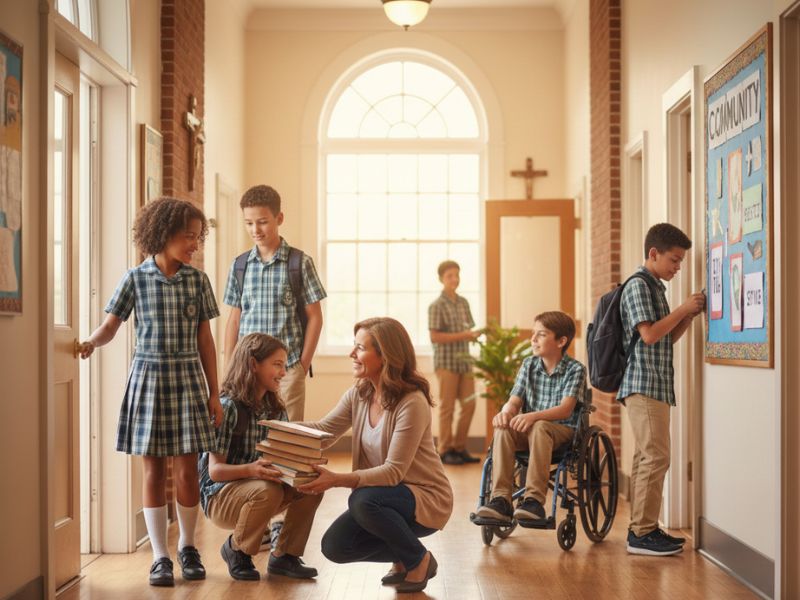
Catholic schools often feel like a community, not just a building. Students learn how to support one another, how to work as a team, and how to respect people of different ages and backgrounds. That sense of belonging is important. When students feel connected, they show up with more motivation. They participate more. They feel proud of their school.
This connection also supports student mental health. Feeling seen, guided, and supported can reduce stress and help students feel more secure during difficult years.



.jpg "University of Houston Invests in the Future of Engineering and Nursing")