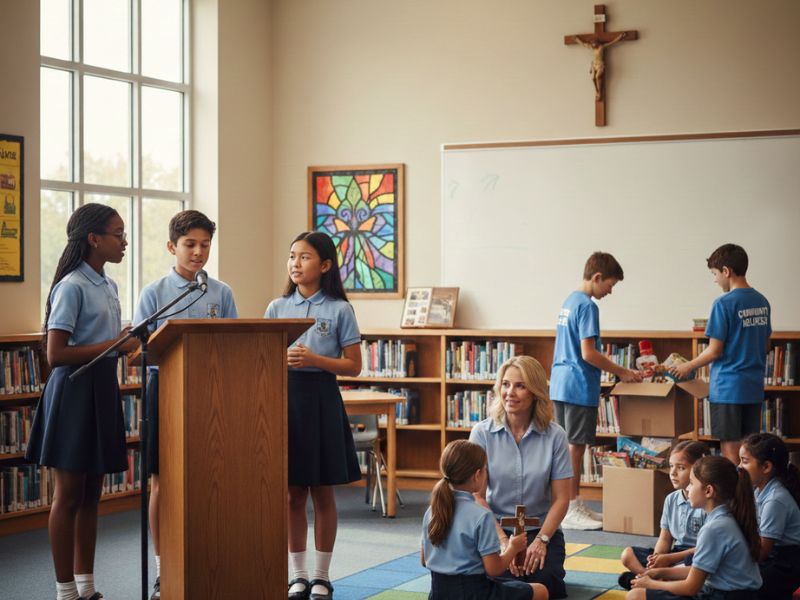
Catholic education goes beyond textbooks to teach students the art of clear speaking and kind listening through values and daily practice.
Communication is one of the most important skills a person can have. It is not just about talking; it is about making sure others understand your ideas and feelings, so that you are heard too. In the United States, many families choose Catholic schools because they want their children to be confident in how they express themselves. Catholic schools have a unique way of helping students become better at both speaking and listening.
Building confidence in public speaking
From a very young age, students in Catholic schools get many chances to speak in front of others. This might happen during a morning prayer, a school play, or a presentation in class. When children practice speaking often, they stop being afraid of it. They learn how to stand tall, look people in the eye, and speak clearly so everyone can hear.
This practice helps them in the real world. Whether they are telling a story to friends or explaining a project to a teacher, they feel comfortable using their words. They learn that their voice matters and that they have something valuable to say. This builds a type of confidence that lasts a lifetime.
The power of active listening
Listening is just as important as speaking, but it is often harder to learn. Catholic schools teach students to be active listeners. This means they do not just sit quietly while someone else talks. They focus on the speaker, try to understand their feelings, and wait for their turn to respond.
Because these schools focus on respect, students learn that listening is a way to show kindness. They are taught that every person is a child of God and deserves to be heard. When children learn to listen with their hearts, they become better at solving problems and making friends. They learn to value different points of view, which helps them get along with all kinds of people.
Learning to communicate with kindness
In many Catholic schools, the goal of communication is not just to be smart or loud. It is helpful and kind. Students are encouraged to use "grace-filled" speech. This means they try to choose words that build people up instead of tearing them down. Even when they disagree with someone, they learn how to say it politely.
Teachers model this behavior every day. When a teacher listens patiently to a student’s question, they are showing the child how to act. This creates a safe place where students are not afraid to ask for help or share a new idea. When the classroom feels safe, communication flows naturally and honestly.
Prayer as a tool for communication
One special part of Catholic education is the time spent in prayer and reflection. While prayer is a way to talk to God, it also teaches students how to be still and quiet. In a world that is always noisy with screens and phones, learning to be quiet is a great skill.
During these quiet moments, students learn to think before they speak. They reflect on their day and their actions. This habit helps them become more thoughtful communicators. Instead of reacting in anger or jumping to conclusions, they take a second to breathe and choose the best words.
Communication in service and community
Catholic schools often involve students in community service. Whether they are helping at a food bank or visiting a nursing home, students have to talk to people from different walks of life. These experiences teach them how to adapt their communication.
They learn how to be gentle and patient with younger children or how to be respectful and clear when talking to adults. This "real-world" practice is very valuable. It shows them that communication is a tool for service and leadership. By helping others, they find new ways to connect and share a message of hope.
Preparing for future success
When students leave a Catholic school, they take these communication skills with them to high school, college, and eventually their jobs. Being able to explain an idea clearly and listen to a team member are the keys to success in almost every career.
Because they have practiced these skills in a supportive environment, they are ready for the challenges of the future. They know how to lead a meeting, how to interview for a job, and how to be a good friend. They graduate not just with good grades, but with the ability to connect with the world around them in a meaningful way.



.jpg "University of Houston Invests in the Future of Engineering and Nursing")